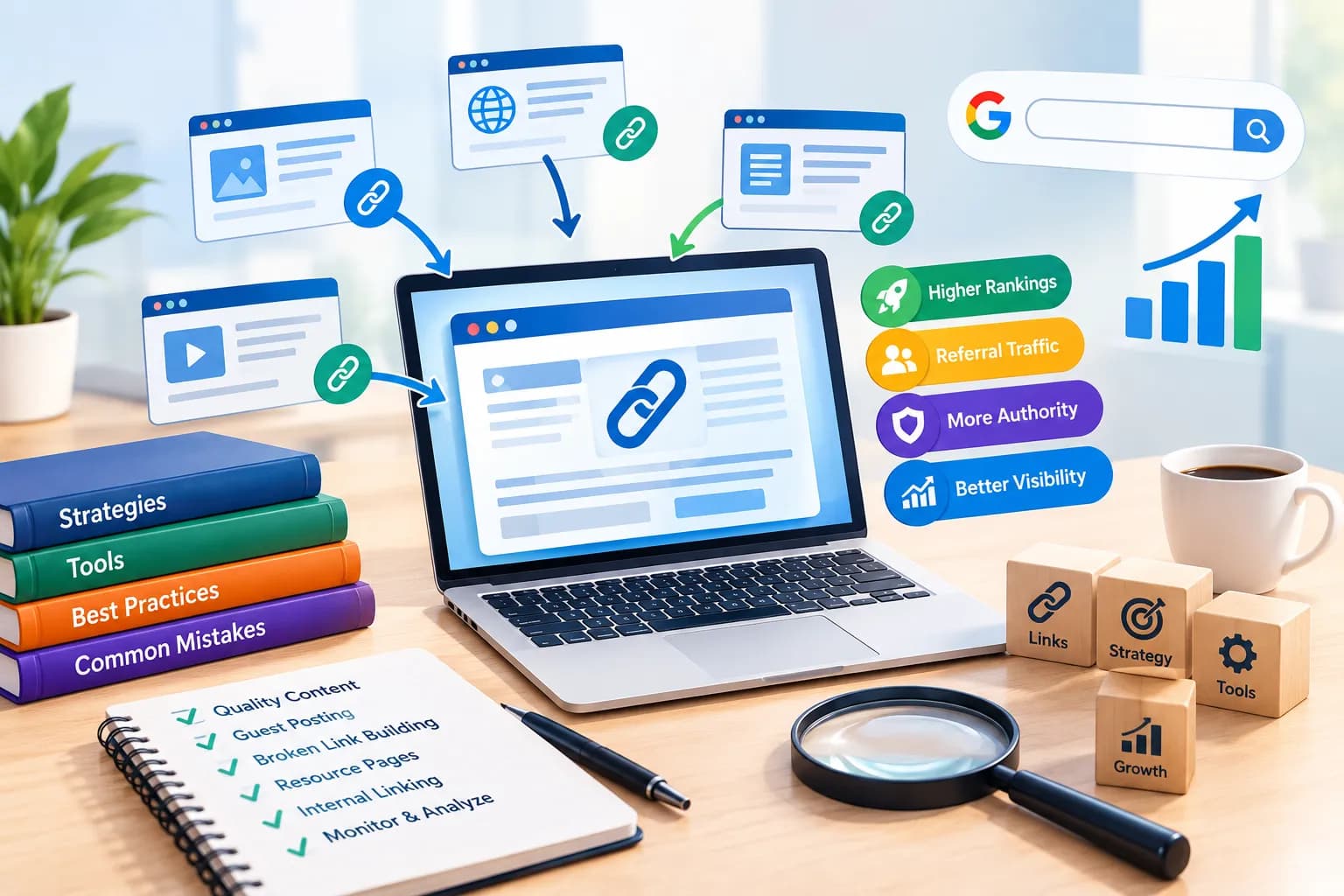
Link building is the process of earning links from other websites to your own pages. In SEO, these backlinks act as references that help Google discover your content and judge its relevance and credibility. Relevant links from reputable sources can support rankings, but they never guarantee them, and manipulative links can cause harm.
Table of contents14 sections
What Is Link Building in SEO?
Link Building Definition Explained Simply
Link building means getting other sites to link to yours through useful content, outreach, and genuine mentions. It is one part of off-page SEO. In competitive niches, relevant editorial backlinks can help pages compete, alongside content quality, search intent, technical accessibility, and other ranking signals.
How Backlinks Work as a Google Ranking Factor
Google uses crawlable links to find pages and understand what they cover. Links are one signal among many, and relevance, context, and source quality count for more than volume.
What Is a Backlink? (With Examples)
A backlink is a link from one website to another. If a marketing blog cites your survey and links to it, that is a backlink. So is a local bakery listed on a city blog's "best of" page.
Why Link Building Matters: Benefits for Your Website
How Link Building Helps SEO and Organic Rankings
Relevant, crawlable links help Google discover your pages. Discovery does not guarantee crawling, indexing, or better rankings, but pages with strong editorial links often compete better in organic search.
Backlinks and Referral Traffic
A good link also sends real visitors. A mention on a busy industry site can bring referral traffic for years, so track it alongside rankings.
Link Building and Website Authority / Topical Trust
When respected sites in your niche reference you, it signals expertise on the subject. Domain Rating (Ahrefs) and Domain Authority (Moz) are third-party metrics, not Google scores. Use them to compare prospects, not as proof of ranking power.
Types of Backlinks You Should Know
Dofollow vs. Nofollow Links
Ordinary links need no special tag, and Google may treat them as ranking signals. Attributes such as nofollow, sponsored, and ugc tell Google to handle a link differently. Nofollow links can still bring traffic and brand exposure, and not every ordinary link passes ranking value. Understanding the difference between these link types is essential for evaluating your backlink profile. Read our detailed guide on dofollow vs nofollow backlinks to learn how their attributes work and how they affect SEO.
Earned Links vs. Built Links vs. Bought Links
Earned links arrive because people value your content. Built links come from outreach. Buying links to pass ranking credit breaks Google's link spam policies. Genuine advertising is acceptable when properly qualified, but it is not a ranking shortcut.
Internal Links vs. External (Off-Page) Links
Internal links connect pages on your own site. External links come from other domains and form the off-page side of SEO.
Sponsored and UGC Links: What Do These Attributes Mean?
The sponsored attribute marks paid or affiliate links. The ugc attribute marks user-generated content such as comments and forum posts. Google explains both in its guidance on qualifying outbound links.
Natural Links vs. Self-Created Links
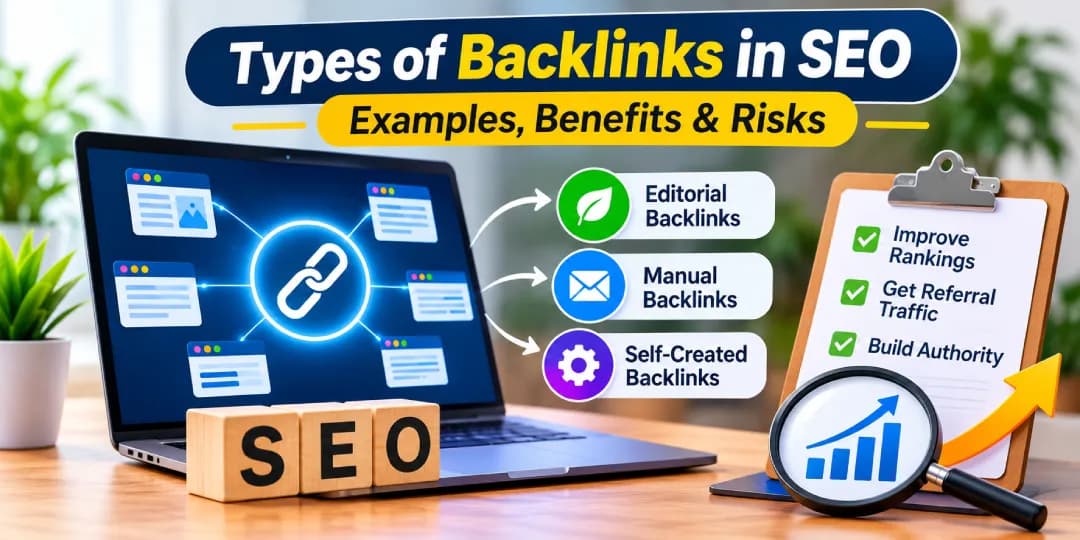
Natural links appear because someone chose to cite you. Self-created links, like forum signatures or mass directory submissions, are usually low value and can look manipulative. Backlinks come in many forms, and understanding their differences can help you choose the right link-building strategies. Explore our detailed guide on types of backlinks in SEO to learn about different backlink categories, their benefits, and potential risks.
Types of Link Building Strategies
White Hat vs. Black Hat Link Building Techniques
White hat methods follow Google's guidelines. Black hat tactics, such as private blog networks, link schemes, and automated link building, may work briefly but risk penalties.
Manual Outreach Link Building
Personal outreach to relevant sites is slower than automation, yet it tends to earn better and more durable links.
Natural/Organic Link Acquisition
Organic links happen when content is good enough that people cite it unprompted. It still usually needs some promotion to get noticed. One effective way to earn these natural backlinks is through editorial link building, where publishers and website owners link to your content because they find it valuable, relevant, or worth citing.
What Makes a High-Quality Backlink?
Ask a few questions before pursuing any link. Is the site relevant to your topic? Does it have a real audience and organic traffic? Is the link editorial, placed inside useful content? Would you want it even if search engines did not exist?
Here is a hypothetical example. A small CRM software company is considering a link from a respected sales blog that publishes original advice, has an active readership, and links out sparingly. That is a strong prospect. A generic "write for us" site covering casinos, fashion, and plumbing in one place is not, even if its Domain Rating looks high. A handful of relevant editorial links usually beats hundreds of weak ones.
Anchor Text and Link Placement Best Practices
Descriptive anchor text tells readers what to expect. Mix branded, partial, and generic anchors, because repeating exact-match keywords looks over-optimized. Links placed naturally within relevant content give useful context to readers and search engines. However, placement alone does not guarantee ranking value, and sitewide footer or sidebar links should never be pursued just to manipulate rankings.
Linkable Assets: Content That Earns Backlinks
Original research, free tools, templates, and in-depth guides give people a reason to link. Without a strong asset, outreach gets much harder.
How to Build Links for SEO: A Step-by-Step Beginner's Guide
Create Link-Worthy, Quality Content
Publish something others will want to cite, such as original data, a clear framework, or a thorough how-to.
Find Relevant Linking Opportunities
Look for sites that already cover your topic, accept contributions, or maintain resource lists.
Analyze Competitor Backlinks and Find Link Gaps
Here is a simple, illustrative workflow. Pick three direct competitors and use a tool such as Ahrefs to find referring domains that link to more than one of them but not to you. Check that each site is genuine and relevant, match it with one of your resources, and pitch personally. Results vary, so treat this as a process, not a promise.
Outreach and Guest Posting
Pitch a specific idea. For example: "Hi Sam, I enjoyed your piece on email deliverability. We surveyed 300 marketers about bounce rates, and the findings might suit your readers. Want me to send them over?" Short and specific beats a template.
Guest posting is fine when the goal is to share expertise with a relevant audience and earn real referral traffic. Mass-producing articles mainly to place keyword-rich links can be treated as link spam.
Broken Link Building
Find dead links on relevant pages, then suggest your content as a replacement. It helps the site owner and earns you a link.
Resource Page Link Building
Many sites keep curated resource pages. Ask for inclusion only when your content genuinely fits.
Monitor and Analyze Your Link Building Report
Track new and lost links, referring domains, referral traffic, target-page performance, and conversions. Do not judge success by DR alone. Review your backlink profile now and then for irrelevant or suspicious patterns, and disavow only clearly manipulative links, not every weak one.
Popular Link Building Techniques and Tactics
Guest Blogging and Guest Posts
Writing for respected blogs shares your expertise and can bring referral traffic. Keep links editorially appropriate and qualified where needed.
Broken Link Building
This works best when you have a close substitute for the missing resource.
Digital PR Link Building
A typical workflow starts with original data, such as a survey or an analysis of public figures. Next, turn the findings into a clear story with one or two quotable numbers. Then pitch it to journalists who cover that beat. Coverage is never guaranteed, so choose angles that serve their readers, not just your brand.
Social Link Building
Social links rarely carry ranking weight, but sharing content there can put it in front of people who may link to it.
B2B and Local SEO Link Building
B2B brands benefit from partner and industry links. Local businesses can earn links through chambers of commerce, sponsorships, and community groups.
Link Reclamation: How to Recover Lost Backlinks
Links disappear for ordinary reasons: a deleted page, a changed URL, a site redesign, or an edited article. Start by checking whether your own page now returns an error, then add a 301 redirect to the closest relevant page. If the other site removed the link, a polite note asking to restore it sometimes works.
Unlinked Brand Mentions: Turning Mentions into Link Opportunities
If a site mentions your brand without linking, a polite request often gets the link added.
Journalist Outreach and Becoming a Source
Offer expert quotes to reporters when your input is relevant and timely.
Skyscraper Outreach and Content Promotion
Improve on a top-performing piece, then tell the sites that are linked to the original.
Niche Edits and Contextual Link Insertions
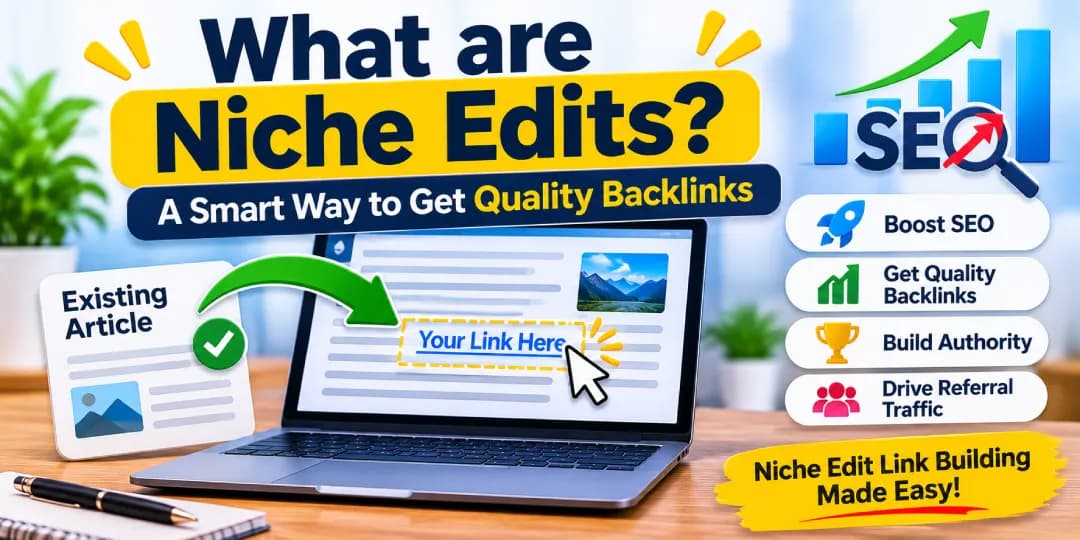
A niche edit places your link in an existing relevant article. It must make editorial sense, and paying to pass ranking credit breaks Google's guidelines. If you want to understand how this technique works, explore our detailed guide on what are niche edits, including its benefits, risks, and best practices.
Infographic Outreach and Visual Link Building
Clear, accurate visuals are easy to cite, especially when they summarize data.
Partner Links and Industry Associations
Suppliers, partners, and industry bodies often provide legitimate, relevant links.
Best Link Building Tools (Ahrefs, Moz, and More)
Using Ahrefs for Link Building (Ahrefs Link Explorer Basics)
Ahrefs is strong for backlink data, referring domains, and competitor gap checks. Its limitation is cost, and like every tool, its index is incomplete and its metrics are estimates.
Moz Link Building Tools and Link Explorer
Moz Link Explorer provides link data, domain authority, and spam signals. Treat the spam score as a prompt to investigate, not a final verdict. The Moz blog and its link building guide are also good learning resources.
Free Link Building Tools for Beginners
Google Search Console reports the links to your site for free, though it will not show competitor data. Several backlink checkers offer limited free results, and Semrush has a link building tool for managing outreach.
How to Evaluate Referring Domains and Link Quality
Check topical relevance, real organic traffic, outbound link patterns, and whether the linking page makes sense for readers. Metrics are a starting point, not the verdict.
How to Find Lost Backlinks and Competitor Link Opportunities
Most tools offer lost-link reports and competitor comparisons. Reviewing them monthly keeps problems small.
How to Build Internal Links for SEO
[Internal Linking Best Practices](/blog/what-is-internal-linking-seo-guide-best-practices)
Link related pages with descriptive anchor text, and keep important pages within a few clicks of the homepage.
How Internal Links Support Off-Page SEO Efforts
Internal links help search engines discover related pages and understand how your content is organized. They also guide visitors to important pages. Pages that earn external backlinks can be connected to relevant pages through a useful internal structure.
Deep Linking: Building Links to Important Pages Beyond the Homepage
Point outreach at service pages, resource pages, and blog posts, not only the homepage. These are the pages that need to rank.
Link Building Best Practices and Common Mistakes to Avoid
Quality Over Quantity: What Makes a "Good" Backlink
Relevance, trust, and editorial context matter more than counts. One link from a respected niche publication can outweigh dozens of random ones.
Common Link Building Mistakes That Hurt Rankings
Typical errors include buying links in bulk, ignoring relevance, and chasing metrics instead of audiences.
Ethical (White Hat) Link Building Guidelines
Be transparent, add real value, and never promise results you cannot control.
Link Exchanges and Reciprocal Linking: Risks and Best Practices
Excessive link swapping violates Google's link spam policies. Occasional natural cross-references between related sites are fine.
Anchor Text Over-Optimization and Link Spam Risks
Too many keyword-rich anchors can look unnatural. Vary them and let context decide.
Link Building Myths: What Actually Matters?
More links do not always mean better rankings. Relevance, trust, and content quality matter most.
Community Insights: Real-World Link Building Advice
Common Challenges SEOs Face With Link Building
Low reply rates, slow results, and difficulty proving ROI are the problems practitioners raise most often.
Practical Tips From Experienced Link Builders
Personalize every pitch, build relationships before asking, and focus on pages that deserve links.
Latest Link Building Trends and Updates
How Google's Algorithm Updates Affect Link Building
Google's spam updates target manipulative link practices, so genuine editorial placements are the safer long-term approach.
Current Trends Shaping SEO Link Building Strategy
Digital PR, original research, and relationship-driven outreach are widely discussed as alternatives to mass tactics. Check recent sources before building a strategy around any trend.
Brand Mentions, Co-Citations, and AI Search Visibility
Nobody can guarantee visibility in AI-driven search, and brand mentions are not a confirmed ranking factor. The practical approach is to earn genuine coverage from authoritative sources and keep your brand information consistent.
Original Research and Data-Driven Link Building
Unique data gives others something to cite, which makes outreach easier and more credible.
Should You Hire a Link Building Service or Do It Yourself?
When to Use a Professional Link Building Agency
Consider an agency when you lack time, outreach capacity, or experience. Ask for transparent methods, real placement examples, clear pricing, and regular reporting.
DIY Link Building vs. Outsourcing: Pros and Cons
DIY gives you control and costs less cash but takes time. Agencies save effort and usually charge monthly retainers or per-project fees, though quality varies. Compare deliverables, reporting, and risk, and avoid anyone who promises rankings.
Conclusion
Link building is about earning relevant, trustworthy links that support your rankings and reputation. Create content worth citing, reach out thoughtfully, and measure real results. Skip shortcuts that put your site at risk.
Frequently Asked Question
What is link building in SEO?
It is the practice of earning backlinks from other websites to improve discovery, credibility, and rankings.
Is link building still important for SEO?
Yes. Links help search engines discover pages and understand their relevance. Their value depends on context and other signals, and more links do not guarantee better rankings.
How long does link building take to work?
It depends on competition and site history. Many sites need several months to see clear movement.
Is buying backlinks safe?
Buying links to pass ranking credit goes against Google's spam policies. Genuine advertising is fine when qualified with sponsored or nofollow.
How can beginners start link building on a small budget?
Publish one strong asset, run a competitor gap check with free tools, and send a few personalized pitches each week.
How do I get backlinks for my website for free?
You can earn backlinks for free by creating useful content, finding broken links, contributing to relevant websites, and reaching out to publishers with personalized suggestions.
What's the difference between link building and backlink building?
Link building and backlink building generally mean the same thing: earning links from other websites that point to your website.
How many backlinks do I need to rank higher?
There is no fixed number of backlinks needed to rank higher. Focus on relevant, trustworthy links, helpful content, search intent, and overall SEO rather than backlink count alone.
Can I do link building myself without hiring an expert?
Yes. Beginners can build links themselves by creating link-worthy content, researching relevant websites, using free SEO tools, and sending personalized outreach emails consistently.