Whereas search engine optimization involves the strategic effort to improve a webpage to position higher on search engines without cost (generally Google, Bing, or AI search engines), SEO attracts customers to a business, blog, or digital storefront at the right moment in order for that page to be the optimal first result. When someone searches "coffee shops near me" or "how to fix a leaking sink," SEO is what determines which pages are shown in these results as the first pages versus as the last on the fifth page. It is a combination of the writing on the webpage and the technical structure of the site. Visibility on search engines relies heavily on a webpage's optimization. Understanding the key concepts of SEO is the first step to growing visibility.
Understanding SEO: How It Works, Benefits, and Best Practices
What Is SEO? (Definition and Meaning)
SEO includes all the techniques that can be employed to a website to improve its ranking on search engines organically, without payment. These can range from the content, to the code, and the website's online reputation.
SEO Meaning and What SEO Stands For
Search engine optimization (SEO) focuses on improving a website so search engines can assess its content and rank it higher in search result pages. Each search engine, including Google, Bing, or newer AI-based tools, utilizes algorithms to sort through the estimated billions of web pages and show results that are highly probable to answer the searcher's query.
What Is SEO Marketing in Simple Terms
SEO marketing relies on core SEO principals and has a specific end goal in mind. This usually consists of lucrative goals, such as lead generation, product sales, or even just increased brand recognition. Unlike most marketing channels, SEO marketing does not purposely buy visibility. Instead, through hard labor, visibility is earned. Because of the longevity that well-optimized pages or posts are able to retain, there is a clear competitive advantage for companies who engage in SEO marketing. This is why most companies integrate SEO marketing into their digital marketing strategies.
Common Misconceptions About SEO
Many people seem to think SEO is as simple as keyword stuffing. That practice was effective for a short time, but search engines now are significantly more advanced. Instantaneous results from SEO is another widespread idea. In reality, it usually takes quite some time, on the order of weeks or months, to see movement in rankings. People tend to believe that the aspect of SEO that is most important is the technical side. In reality, usefulness and quality of the content matter just as much as technical aspects.
How Does SEO Work?
SEO works by aligning a website with what search engines look for when deciding how to rank pages. That alignment happens across content quality, technical performance, and the site's reputation across the web.
How Search Engines Crawl, Index, and Rank Pages
Search engines employ automated programs to scan the internet for new and revised pages. Once a page is found, it is stored in an index, which can be thought of as a giant database of web pages. When a search query is input, the engine performs a search of the index and presents pages in the order of most relevance and highest quality. Crawling, indexing, and ranking occur often on an automated basis and serve as the basis of all other digital strategies.
The Role of Search Engine Algorithms and Ranking Factors
Search engine algorithms consider hundreds of factors when placing pages on search results. Some of the important factors for higher placement are relevance of content, speed of page loading, mobile friendliness of the page, and the number and quality of backlinks. Google altered its algorithms many times over the years and will do so in the future. This means what worked a few years ago may no longer hold true. That is why remaining updated with search engine optimization is important.
SEO vs PPC (Organic vs Paid Search)
It is essential to differentiate between SEO and paid search advertising since many people confuse the two strategies. Paid search (PPC) means that a company pays to put their ad at the top of search results. Organic search results are results that are earned. Generally, companies use these together, however, SEO provides a better return on investment in the long term because the traffic will continue to flow after the ad spend stops.
The Core Components (Pillars) of SEO
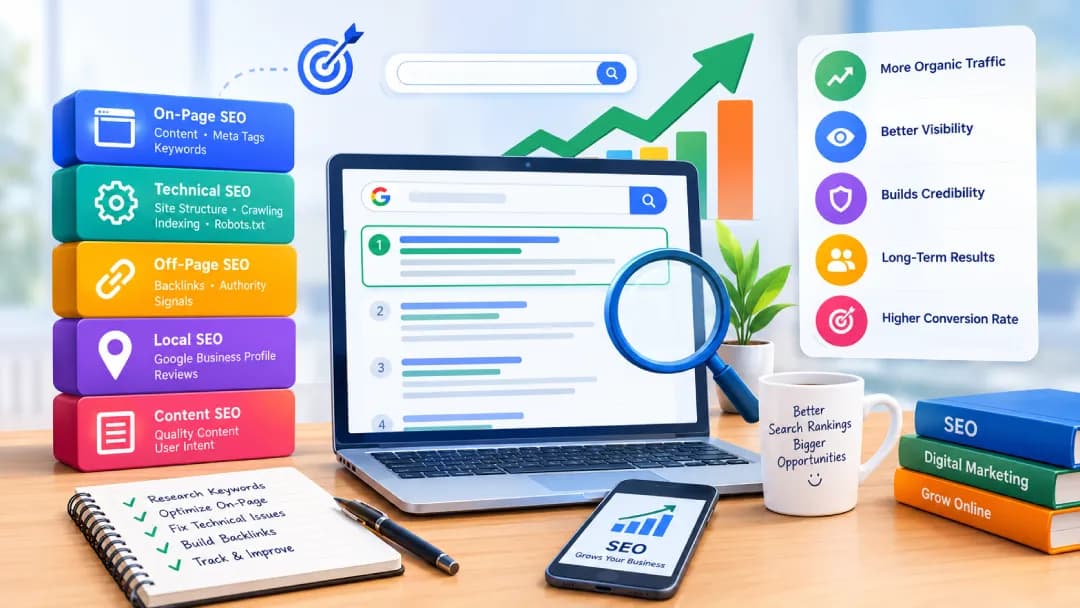
SEO isn't one single task. It's built from several interconnected pillars, each addressing a different part of what makes a website easy to find and trust.
On-Page SEO (Content, Title Tags, Meta Tags, Keywords)
On-page SEO focuses on working with what is on the webpage, such as page titles, page descriptions, page headings, and page content. Searching keywords is very important for this, since the research provides search query data for the terms and phrases that are being used, along with all of their possible variants and longer more specific query extensions.
Technical SEO (Site Structure, Crawling, Indexing, Robots.txt)
Technical SEO focuses on the salvaging of search engines’ access to and understanding of a website. A website must have clean hierarchical page structure, correct placement of the robots txt file, a load time optimized to performance, and mobile-centric design. Suboptimal technical SEO can undermine the highest quality of content.
Off-Page SEO (Link Building and Authority Signals)
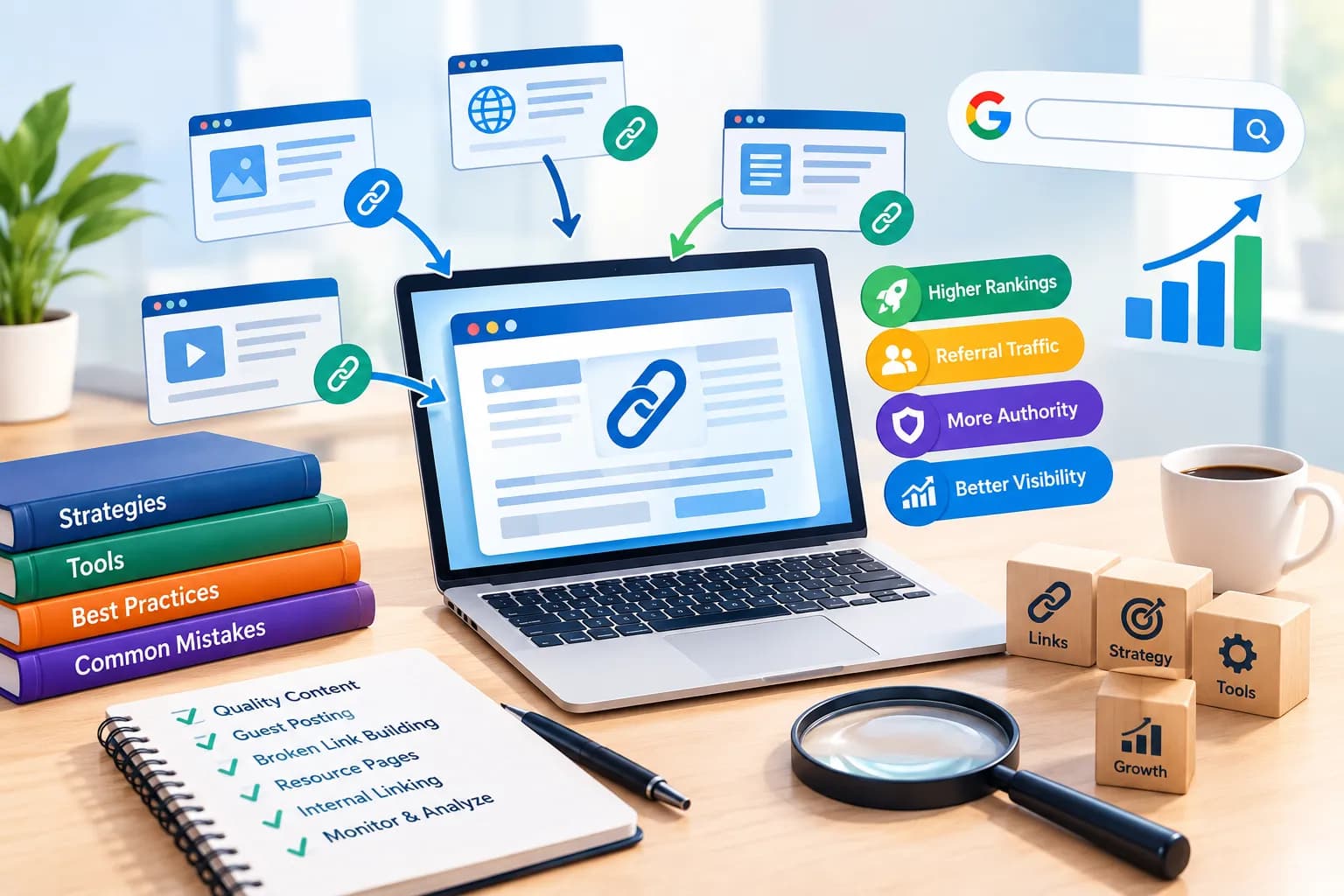
Off-page SEO is primarily concerned with link building. Link building is the process of gaining links from external web pages. Search engines give the most weight to links from other respected domains. Links act as citations in the eyes of search engines, and pages with more links that come from other pages gain more authority.
Local SEO
Local Search Engine Optimization (SEO) helps businesses rank based on a physical location (or proximity) in search results for keywords that include phrases like “plumber near me.” Optimizing a Google Business Profile, and positive local reviews, are main factors of local SEO.
Content SEO and Content Quality
Content quality connects everything. Search engines are now showing preference to clearly answer search questions in a page devoted to the answer, rather than a page built for intentionally ranking high in search results.
Why SEO Matters for Websites and Businesses
SEO isn't optional for most businesses operating online today. It's often the primary way potential customers discover a website in the first place.
Benefits of SEO for Organic Traffic and Visibility
Strong SEO increases website visibility across search engines, driving consistent organic traffic without the recurring cost of paid ads. Over time, this can significantly reduce customer acquisition costs.
SEO for Small Business vs Enterprise SEO
Local SEO and tailored content are usually the only tools small businesses can use to compete with big businesses. Enterprise SEO, on the other hand, encompasses the management of 1000s of website pages, various markets, and advanced systems and architectures.
SEO's Role in the Broader Digital Marketing Mix
SEO functions alongside social media, email, and paid search as one of the multiple components of a digital marketing strategy. Each supporting channel tends to boost the others, but SEO historically provides the most consistent, long-term benefits.
Key SEO Concepts Every Beginner Should Know
A few foundational concepts come up constantly in SEO discussions, and understanding them makes everything else click into place.
Keyword Research and Search Intent
Keyword research is about more than just finding popular search terms. It is about understanding search intent. Search intent is the reason behind why people search, which could be for information, a product, or a specific website.
EEAT (Experience, Expertise, Authoritativeness, Trustworthiness)
Google analysis of content is partially based on EEAT, an assessment of if the person or organization behind the content has real experience and expertise on the topic, and if the site is trustworthy.
User Experience (UX) and Page Experience Signals
A page that's slow, cluttered, or hard to navigate tends to underperform, regardless of how good the content is. Search engines pay attention to these page experience signals.
Semantic SEO and Answer Engine Optimization (AI Search)
With the evolution of search, both semantic SEO and answer engine optimization have become important considerations. These strategies cover topics in more detail and design the content to help both the most established search engines and the more advanced AI search engines understand them.
How to Do SEO A Basic Step-by-Step Overview
Getting started with SEO doesn't require a technical background, just a clear, methodical approach.
Step 1: Conduct Keyword Research
Start by identifying the terms your audience actually searches for, along with the intent behind them.
Step 2: Optimize On-Page Elements
Refine title tags, headings, and content so they clearly reflect what the page offers.
Step 3: Improve Technical Site Health
Address page speed, mobile responsiveness, and crawlability issues.
Step 4: Build Authoritative Backlinks
Earn links from credible, relevant websites to strengthen authority.
Step 5: Create High-Quality, Helpful Content
Write content that genuinely answers questions rather than existing purely to rank.
Step 6: Track Performance with SEO Analytics Tools
Use tools like Google Search Console to monitor rankings, traffic, and search queries driving visits.
SEO Best Practices and Common Mistakes to Avoid
Even experienced marketers occasionally fall into avoidable traps, so it helps to keep a few guiding principles in mind.
Google Search Essentials and Helpful Content Guidelines
Google's Search Essentials and Helpful Content guidelines emphasize creating content for people first, not search engines. Following these reduces the risk of penalties and builds sustainable rankings.
Common SEO Mistakes Beginners Make
Common missteps include ignoring mobile usability, duplicating content across pages, and chasing rankings for irrelevant keywords instead of ones aligned with actual business goals.
Tools for Learning and Practicing SEO (Google Search Console, etc.)
Google Search Console remains one of the most valuable free tools for understanding how a site performs in search results and identifying technical issues early.
Authoritative Resources to Learn SEO
For readers who want to go deeper, a few trusted sources stand out.
Google's Official SEO Starter Guide
Google publishes its own SEO Starter Guide, which offers direct, first-party guidance on best practices straight from the source that matters most.
Trusted Industry Guides and Courses
Past Google, other institutions and universities as well as established industry publications plus programs at universities, including Michigan Technological University, provide courses for those wishing to improve SEO skills.
Conclusion
SEO is about enhancing your website’s findability, comprehension, and trust. It merges technical finesse with quality content in the form of digital publications. It’s a process, so you really have to have some level of patience. Results in this strategy come gradually, not overnight. New or improved strategies can benefit from the principle of usefulness for readers. In the context of search engines, this principle tends to be a winning strategy.
FAQs
What does SEO stand for?
SEO stands for search engine optimization, the practice of improving a website's visibility in organic search results.
What is the difference between SEO and SEM?
SEO focuses on unpaid, organic rankings, while SEM, or search engine marketing, includes both SEO and paid advertising strategies like PPC.
How long does SEO take to show results?
Most websites start seeing noticeable movement within three to six months, though competitive industries can take longer.
Is SEO still relevant with AI search engines?
Yes, AI search engines still rely on many of the same principles, including quality content and clear site structure, making SEO arguably more important as answer engine optimization grows.
Can I learn SEO for free?
Yes, Resources like Google's official SEO Starter Guide and Google Search Console documentation offer solid, free starting points.
What is the difference between on-page and off-page SEO?
On-page SEO involves elements directly on a website, such as content and meta tags, while off-page SEO involves external factors like backlinks.
Do I need SEO if I already run paid ads?
Yes, Paid ads stop driving traffic the moment spending stops, while SEO builds lasting, organic visibility that continues working over time.