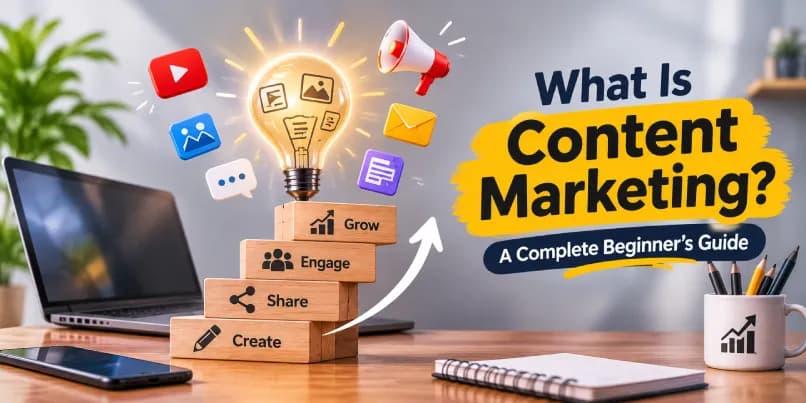
Content marketing is a strategic marketing approach where a business creates and shares useful content, such as articles, videos, emails, and podcasts, to attract a clearly defined audience, build trust, and eventually encourage profitable customer action. Instead of pushing a sales message first, you help people solve a problem or answer a question, and the buying decision follows naturally. In this guide, you will learn what content marketing means, how it works, which formats and strategies to use, how to measure results, and whether it still pays off today.
Table of contents17 sections
What Is Content Marketing? (Definition and Meaning)
Content Marketing Definition, Explained Simply
The Content Marketing Institute describes content marketing as a strategic approach built around creating and distributing "valuable, relevant, and consistent content" to attract and retain a defined audience, with the goal of driving profitable action. That is the formal definition. In plain words, it means giving people something worth reading, watching, or listening to before you ask them to buy anything.
Think of it as earning attention instead of renting it. A company that publishes a clear guide on choosing running shoes is doing content marketing. So is a software brand with a weekly podcast about team productivity. The content does the early work of building familiarity and credibility.
The Core Elements of Content Marketing
Every content marketing program, whatever its size, rests on a few basics: a defined audience, content that is genuinely useful to that audience, a consistent publishing rhythm, and a clear business goal behind it all. Remove any one of them and the effort tends to drift.
Content Creation, Distribution, and Audience Engagement
Creation is the part most people picture, but it is only one third of the job. Distribution gets the content in front of people through search engines, social platforms, email, or partners. Engagement is what happens next: comments, shares, replies, subscriptions, and return visits. If any of these three is missing, good content simply sits unread.
How Content Marketing Differs from Traditional Advertising
Traditional advertising interrupts. A TV spot, a banner, or a print ad asks for attention while the person is doing something else. Content marketing invites. The audience chooses to read or watch because the topic matters to them.
There is also a difference in lifespan. An ad stops working the moment the budget stops. A well-built article can keep bringing in visitors for years. That said, the two approaches can work together, and many brands use paid promotion to push their best content further.
Content Marketing vs. Content Strategy
These terms get mixed up constantly. Content strategy is the plan: who the content is for, what it should achieve, which topics matter, and how it will be governed. Content marketing is the execution of that plan, including creating, publishing, promoting, and measuring.
A simple way to remember it is that strategy answers "why and what," while marketing answers "how and where." You need both, and the strategy should come first.
Content Marketing vs. Social Media Marketing
Social media marketing is a channel. Content marketing is the broader practice that feeds that channel. Social posts are one type of content, but content marketing also covers your blog, newsletters, podcasts, and resources hosted on your own website.
The practical difference is ownership. You own your website and email list. You only borrow space on social platforms, and their rules and reach can change without notice.
How Does Content Marketing Work?
The Core Process: Attract, Engage, Convert, and Retain
Most content marketing follows four steps. First, you attract people by publishing content that matches what they are searching for or talking about. Second, you engage them with follow-up content that deepens their interest, such as a related guide or a newsletter.
Third, you convert them by offering a clear next step, like a free consultation, a demo, or a purchase. Finally, you retain customers with helpful material after the sale, including tutorials, tips, and community content. Retention is often the most overlooked step, yet it protects revenue the most.
How Content Marketing Fits into Digital Marketing
Content is the fuel for almost every other digital marketing channel. SEO needs pages that answer search queries. Email needs something worth sending. Social media needs posts worth sharing, and paid campaigns perform better when they point to useful landing content. PR and content marketing also overlap, since a strong research report or expert article often earns media coverage and backlinks.
So when people ask what content marketing is in digital marketing, the short answer is that it is the layer that gives every other tactic something valuable to work with.
How Content Marketing Supports the Customer Journey
Buyers rarely decide in one visit. They notice a problem, research options, compare, and then choose. Content can support each of those moments. A short explainer helps early on, a comparison page helps in the middle, and a case study or pricing guide helps at the end.
When you map content to these moments, you stop guessing and start meeting people where they actually are.
Personalization builds on this idea. Dynamic website blocks and email content can change based on what someone has read, clicked, or bought, so a returning visitor sees a case study while a newcomer sees an introductory guide. You do not need advanced software to begin. Segmented email lists are a sensible first step, and you can add deeper personalization at each stage of the journey as your data improves.
Why Is Content Marketing Important?
Building Brand Awareness, Authority, and Trust
People trust brands that teach them something. Consistent, accurate content shows that you understand your field, and over time your name becomes familiar in your niche. This is where thought leadership comes from: not from claiming expertise, but from demonstrating it repeatedly.
Increasing Organic Traffic and Supporting SEO
Search engines reward pages that satisfy what people are looking for. Every helpful article is another chance to appear in search results, and a library of quality content builds topical authority. Unlike paid clicks, organic visits do not cost you per visitor once the page is live.
Generating Qualified Leads and Conversions
Content attracts people who are already interested in the problem you solve, so the leads tend to be warmer. Gated resources such as ebooks, checklists, or webinars allow you to exchange value for an email address. For content marketing lead generation to work, the offer must match the topic of the page that promotes it.
Reducing Customer Acquisition Costs
Paid ads charge you every time. Content, on the other hand, keeps working after the initial effort. As a result, the average cost of acquiring a customer through content often drops over time, especially when older articles keep ranking. It is not free, but it is usually more cost effective than relying only on advertising.
Improving Customer Retention and Loyalty
Content does not stop mattering after someone buys. Onboarding guides, how-to videos, and customer newsletters help people get more out of what they purchased. Happy customers stay longer, buy again, and recommend you, which builds brand loyalty without extra ad spend.
Supporting Long-Term Revenue and Business Growth
When awareness, trust, leads, and retention all improve together, revenue growth follows. The effect is gradual. Content marketing is closer to planting an orchard than flipping a switch, but the returns tend to compound as your library and audience grow.
What Are the Different Types of Content Marketing?
Blog Posts and Long-Form Articles
Blog posts remain the backbone of most programs. They target search queries, explain topics in depth, and give you something to share elsewhere. Long-form articles work best for complex subjects where readers want thorough answers.
Videos and Short-Form Content
Video suits demonstrations, product walkthroughs, and storytelling. Short-form clips are good for reach and quick tips, while longer videos build deeper trust. You do not need expensive equipment to begin, but clear audio matters more than most beginners expect.
Social Media Content
Social media content includes posts, carousels, stories, polls, and live sessions. It helps with visibility and conversation. Each platform has its own culture, so a post written for LinkedIn rarely works unchanged on Instagram.
Email Newsletters and Campaigns
Email gives you a direct line to people who have already shown interest. Newsletters, welcome series, and educational campaigns keep your brand in front of subscribers without depending on an algorithm.
Podcasts and Audio Content
Podcasts reach people during commutes, workouts, and chores, when reading is not an option. Interviews and expert conversations also build authority quickly, and one recording can later become articles and social clips.
Infographics and Visual Content
Infographics, charts, and diagrams turn dense information into something scannable. They are easy to share and often earn links when they present original data or a clear process.
Ebooks, White Papers, and Case Studies
These longer assets suit readers who are closer to a decision. Ebooks teach, white papers dig into research or technical detail, and case studies show real results. Case studies in particular tend to be persuasive because they prove the claim rather than make it.
Webinars and Online Events
Webinars let you demonstrate expertise live and answer questions in real time. They also produce reusable material, since the recording and transcript can be turned into other content.
User-Generated and Interactive Content
Customer reviews, photos, and testimonials add social proof that no brand message can match. Interactive content, such as quizzes, calculators, and assessments, invites participation and often collects useful data about what your audience cares about.
What Is a Content Marketing Funnel?
A content marketing funnel describes how a person moves from first hearing about you to becoming a loyal customer. It combines the buyer's journey with the types of content that suit each step. The common stages are awareness, consideration, decision, and retention.
Awareness Stage (TOFU): Attracting Potential Customers
At the top of the funnel, people have a problem but may not know your brand exists. Educational blog posts, short videos, social content, and beginner guides work well here. The goal is to be useful and easy to find, not to sell.
Consideration Stage (MOFU): Educating and Nurturing Leads
Now the reader is comparing options. Webinars, ebooks, comparison guides, and email series help them understand the differences and see how you approach the problem. This is where you start collecting contact details with a relevant offer.
Decision Stage (BOFU): Turning Leads into Customers
At the bottom, the buyer is almost ready. Case studies, product demos, free trials, pricing explanations, and testimonials remove the last doubts. The content should be specific and direct.
Retention and Advocacy: Building Long-Term Relationships
After the sale, content keeps the relationship going. Tutorials, customer stories, community spaces, and loyalty updates encourage repeat purchases and referrals. Satisfied customers often become your most credible marketers.
Community is where advocacy becomes practical. Customer communities, discussion groups, and forums give people a place to trade tips and feel connected to your brand. Customer stories and contributions, such as guest tips or shared project photos, turn buyers into visible voices. Some brands formalize this with brand ambassador programs, while others simply encourage customers to create and share their own content. Either way, people who help shape the conversation tend to stay longer.
Choosing Content Formats for Each Funnel Stage
A simple rule helps: lighter formats early, deeper formats later. Use blogs, videos, and social posts for awareness. Use ebooks, webinars, and email sequences for consideration. Use case studies, demos, and testimonials for decisions. Use guides and newsletters for retention. Treat this as a starting point and adjust based on what your audience responds to.
Real-World Content Marketing Examples
Content Marketing Examples from Small Businesses
You do not need a big budget to do this well. Imagine a local landscaping company that publishes seasonal lawn care guides and short how-to videos. Homeowners searching for help find them, trust the advice, and call when the job gets too big. A neighborhood bakery sharing recipes and behind-the-scenes clips on social media follows the same logic. These are illustrative examples, but they reflect how content marketing for local business and small business typically works.
Successful Content Marketing Campaigns from Major Brands
Red Bull is the classic case. Rather than only advertising an energy drink, it built a media operation around extreme sports and events. Its 2012 Stratos project, in which Felix Baumgartner jumped from the stratosphere, was streamed live to a massive global audience and tied the brand to adventure instead of a product feature.
HubSpot took a different route. It built an extensive library of free marketing education, along with free tools, and became closely associated with inbound marketing. The audience was marketers and small business owners, the formats were blog posts, templates, and courses, and the result was a large base of leads who already trusted the company.
B2B Content Marketing Examples
B2B buyers research heavily and involve several decision makers, so depth matters. Salesforce is a good illustration. It publishes research reports, customer stories, and educational resources that speak to business leaders at different stages of evaluation. The content supports long sales cycles by giving each stakeholder something relevant.
Copyblogger shows how a small team can do the same. It grew by publishing free, practical writing and marketing education, then offering paid training and software to the audience it had built. The content came first, and the products followed.
Key Lessons from Successful Content Marketing Campaigns
A few patterns repeat. Successful brands know exactly who they are talking to. They publish consistently for years, not weeks. They focus on helping rather than promoting, and they connect the content to a clear business outcome. Finally, they treat content as an asset to maintain and improve, not a one-time project.
How to Create a Content Marketing Strategy (Step-by-Step)
If you are wondering how to create a content marketing strategy from scratch, the nine steps below give you a practical content marketing process to follow.
Step 1: Define Content Marketing Goals and KPIs
Start with what the business needs: more leads, higher sales, better retention, or stronger brand awareness. Then attach measurable indicators to each goal, such as qualified leads per month or organic sessions. Vague goals produce vague content.
Step 2: Identify Your Target Audience and Create Buyer Personas
Describe the people you want to reach, including their role, challenges, questions, and preferred channels. Talk to customers and sales teams if you can. A persona built on real conversations is far more useful than one built on assumptions.
Once the personas are clear, take audience segmentation one step further. Group people by interests, behavior, and purchase history, because a first-time visitor and a loyal customer need quite different content. Even three or four simple segments are enough to start sending more relevant messages.
Step 3: Conduct Keyword Research and Analyze Search Intent
Find the phrases your audience uses, then look at what currently ranks for them. Search intent matters as much as the keyword. Someone searching "what is" wants an explanation, while someone searching "best" wants a comparison. Match the intent and your content has a far better chance.
Step 4: Analyze Competitors and Identify Content Gaps
Review what competitors publish and where they fall short. Maybe they ignore beginners, lack examples, or have outdated information. Those gaps are your opportunities to publish something clearly better.
Step 5: Choose Content Formats and Distribution Channels
Pick formats that suit your audience and your team's strengths. A small team is usually better off doing two formats well than six poorly. Choose channels where your audience already spends time.
Step 6: Build a Content Calendar and Publishing Workflow
A content calendar sets topics, owners, and dates in one place. Pair it with a simple workflow covering briefing, drafting, editing, approval, and publishing. Consistency matters more than volume, so set a pace you can sustain.
Decide ownership at the same time. Name who writes, who edits, who approves, and who maintains each piece after it goes live. Clear responsibilities stop drafts from stalling and keep published pages from being forgotten, and they are the practical foundation of content governance.
Step 7: Create High-Quality, Helpful Content
Write for the reader first. Answer the question early, use clear language, add real examples, and show first-hand knowledge where you have it. Quality content marketing is specific, accurate, and easy to act on.
Make the content accessible and inclusive as well. Add captions and transcripts to videos and podcasts, write descriptive alt text for images, and use readable type with enough color contrast. Structure pages with proper headings so screen readers can navigate them, and write in plain language so people with different backgrounds and reading levels can follow along. Accessible content reaches more people and usually performs better for everyone.
Step 8: Distribute and Promote Your Content
Publishing is not the finish line. Share each piece through email, social channels, and relevant communities, and consider partners or paid promotion for your strongest work. The next section explains these options in detail.
Step 9: Track Performance and Optimize Your Strategy
Review results on a regular schedule. Look at what drives traffic, leads, and revenue, then do more of what works and improve or retire what does not. Strategy is a loop, not a document you file away.
How to Distribute and Promote Content Effectively
Content Distribution vs. Content Promotion
Distribution is making content available where your audience can find it, such as your site, newsletter, and social profiles. Promotion is the extra push that increases its reach, such as paid ads, influencer shares, or outreach. Both matter, but distribution is the foundation.
Owned, Earned, and Paid Distribution Channels
Owned channels are the ones you control, including your website, blog, and email list. Earned channels come from other people sharing or mentioning you, like press coverage, backlinks, and reviews. Paid channels include sponsored posts, search ads, and promoted content. A healthy mix usually leans on owned and earned channels, with paid used to accelerate.
Collaboration can stretch these channels further. Influencer partnerships put your message in front of an established audience, while co-created content with industry experts adds credibility. Guest contributions and partner publications bring in readers who do not know you yet. Content syndication, where trusted third-party sites republish your articles, can widen reach too, as long as the republished version points back to the original to protect your search visibility.
Using SEO, Social Media, and Email to Reach Your Audience
SEO brings people who are actively searching, so optimize titles, structure, and internal links for web content marketing. Social media spreads content and starts conversations. Email brings readers back again and again. Used together, they cover discovery, amplification, and loyalty.
Repurposing Content Across Multiple Channels
One strong piece can become many. A webinar can turn into a blog post, several short clips, a quote graphic, and a newsletter feature. Repurposing saves time and helps you reach people who prefer different formats.
How to Measure Content Marketing Success and ROI
Essential Content Marketing KPIs and Metrics
Choose a handful of metrics tied to your goals instead of tracking everything.
Organic Traffic and Search Visibility
Track organic sessions, keyword rankings, impressions, and click-through rate in tools like Google Search Console. Rising visibility for target topics is an early sign that your content is gaining traction.
Engagement and Audience Growth
Look at time on page, scroll depth, shares, comments, newsletter signups, and follower growth. These show whether people actually care about what you publish.
Lead Generation and Conversion Rates
Measure form submissions, demo requests, downloads, and the percentage of visitors who take the next step. This links content directly to pipeline.
Customer Acquisition Cost and Revenue
Compare what you spend on content with the customers and revenue it helps bring in. Over time, this shows whether content is lowering your cost of acquisition.
How to Calculate Content Marketing ROI
The basic formula is simple: subtract your content costs from the revenue attributed to content, divide by the costs, and multiply by 100\. For example, if you spend 5,000 and attribute 15,000 in revenue to content, the ROI is 200 percent. Attribution is rarely perfect, because buyers touch several pieces before purchasing, so use consistent rules and treat the number as an informed estimate. Remember too that content often pays back slowly.
The model you choose changes how credit is shared. First-touch attribution gives all the credit to the first piece of content a buyer saw, and last-touch gives it to the final one before the purchase. Multi-touch attribution spreads credit across every interaction. Linear models divide it equally, while position-based models give more weight to the first and last touches. No model is perfect, but picking one and using it consistently makes your trends easier to trust.
Using Analytics to Improve Content Performance
Analytics should lead to action. Find pages with high traffic but low conversions and improve the calls to action. Find pages that are slipping in rankings and refresh them. Study your best performers and ask why they work. Small, steady improvements add up.
Content Marketing Best Practices and Common Mistakes
Best Practices for Creating Consistent, High-Quality Content
Know your audience, publish on a realistic schedule, and keep a clear editorial standard. Build in time for editing and fact-checking. Add expert input or original data whenever possible, since it sets your work apart.
Put simple editorial guidelines in writing. A short document covering brand voice, tone, formatting, and sourcing keeps different writers sounding like one brand. Add a clear process for accuracy: fact-checking, expert review where needed, and legal review for sensitive claims. Governance sounds formal, but for a small team it can be one page that everyone actually uses.
Creating Evergreen Content for Long-Term Results
Evergreen content stays relevant for a long time, such as beginner guides, definitions, and how-to articles. It keeps attracting traffic with little maintenance, so a good share of your calendar should go to it, alongside timely pieces.
Even evergreen pages are not immune to content decay, the gradual loss of organic traffic and relevance as information ages and competitors publish fresher answers. A falling traffic line on a once-strong article is usually the first sign. Regular check-ins catch the problem early, before the page loses its ranking altogether.
Using Clear Calls to Action and Lead Magnets
Every piece should guide the reader to a sensible next step. That might be subscribing, downloading a checklist, or booking a call. Lead magnets work best when they closely relate to the page where they appear.
Updating and Repurposing Existing Content
Before writing something new, check whether an older piece could be improved. Updating statistics, fixing outdated advice, and adding new examples can lift rankings faster than starting from zero.
A content audit makes this systematic. Start with a content inventory, a list of everything you have published across your website, blog, email, and social channels. Then review each item for quality, relevance, traffic, and conversions, and flag duplicate, outdated, or underperforming pages. For each one, decide whether to update it, consolidate it with a similar page, redirect it, or remove it.
It helps to think in terms of a content lifecycle: planning and creation, publication and distribution, performance monitoring, refreshing and republishing, and finally archiving or retiring what no longer serves readers. Treating content this way keeps your library useful instead of cluttered.
Common Content Marketing Mistakes to Avoid
The frequent ones are publishing without a defined audience, chasing keywords instead of helping readers, being too promotional, giving up too early, ignoring distribution, and never measuring results. Another common one is copying competitors without adding a fresh perspective.
How to Overcome Common Content Marketing Challenges
Short on time or people? Narrow your focus and reuse content. Struggling for ideas? Listen to customer questions and sales calls. Unsure about results? Set a clear review schedule and give it enough time, since most programs need months to show their full effect. Need support? Consider content marketing services or freelancers for specific tasks.
Content Marketing for Different Business Types
Content Marketing for Small Businesses
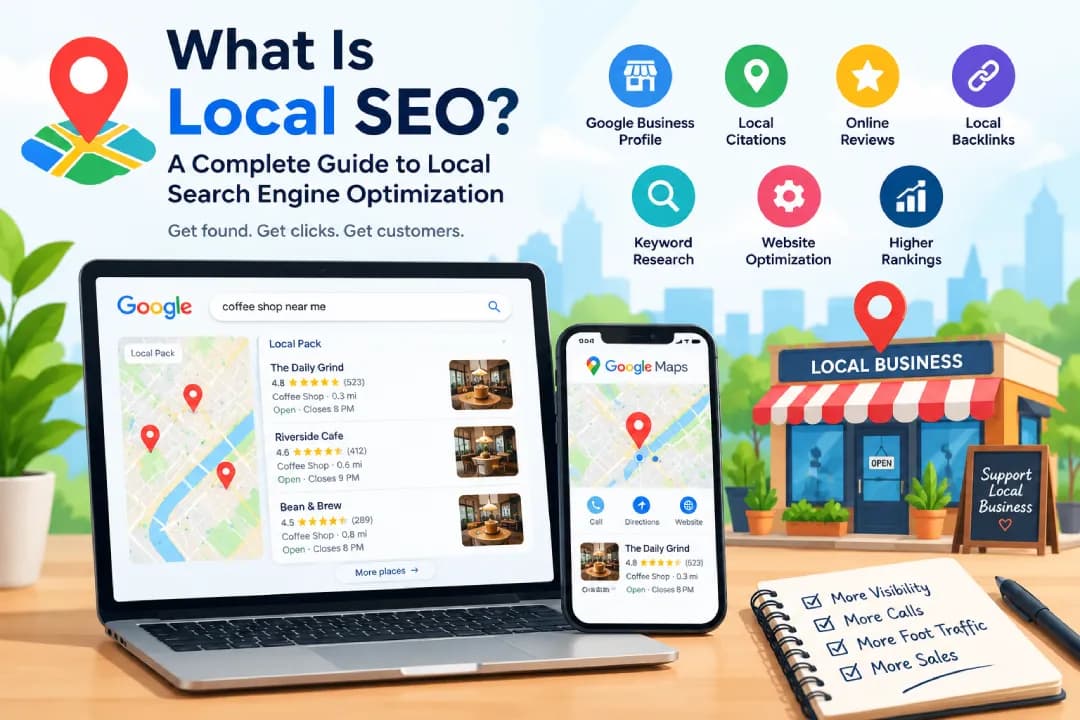
Small businesses should keep it focused. Answer the questions customers ask most often, show local expertise, and use a few channels well. Even a simple blog, a Google Business Profile, and a monthly email can make a real difference. For businesses targeting customers in specific areas, combining content marketing with local SEO can improve local visibility and attract nearby customers.
Content Marketing for E-Commerce Brands
E-commerce thrives on product content, buying guides, comparison pages, reviews, and visual storytelling. Helpful content reduces returns and builds confidence, especially for products people want to research before buying.
B2B vs. B2C Content Marketing
B2B content is usually more detailed, logical, and aimed at multiple decision makers over a longer sales cycle. B2C content is often more emotional, faster-moving, and built around lifestyle and entertainment. However, both succeed when they respect the reader's time and solve a real problem.
Content Marketing for Specialized Industries
Healthcare, finance, legal, SaaS, real estate, and other technical fields need extra care around accuracy and compliance. Expert review is essential. In these areas, trust is the main currency, so clear, evidence-based content stands out.
Every business, regulated or not, also needs to respect basic legal and compliance rules. Check copyright and licensing before using images, video, or music, and keep records of usage rights. Clearly disclose sponsored content and affiliate relationships. Handle audience data with proper privacy and consent, especially when collecting email addresses, and follow the rules in your market for testimonials and customer reviews. When in doubt, ask a qualified professional.
What Are the Best Content Marketing Tools?
Content Research and SEO Tools
Tools such as Google Search Console, Google Trends, Semrush, Ahrefs, and AnswerThePublic help you find topics, understand search demand, and check competitors.
Content Creation and Editing Tools
Google Docs, Grammarly, Canva, and basic video editors cover most beginner needs. AI writing assistants can help with outlines and first drafts, but human review is still necessary.
Content Management Systems and Publishing Platforms
WordPress, Webflow, and Shopify are common choices for publishing content on your site. Pick a system your team can use comfortably without constant developer help.
Content Scheduling, Analytics, and Performance Tools
Buffer, Hootsuite, Trello, Asana, Google Analytics, and email platforms such as Mailchimp help you plan, publish, and measure. Start small and add tools only when a real need appears.
How Much Does Content Marketing Cost?
Main Factors That Affect Content Marketing Costs
Costs depend on content volume, format, quality, industry, and who produces it. Video and original research cost more than short blog posts. Tools, design, and promotion add to the total.
In-House vs. Outsourced Content Marketing
An in-house team offers deeper brand knowledge and control but requires salaries and management. Outsourcing to freelancers or agencies gives flexibility and specialist skills. Many businesses blend both, keeping strategy in-house while outsourcing production.
Creating a Content Marketing Budget for Small Businesses
Start with what you can sustain for at least six months. Divide it among creation, tools, and promotion, and begin with one or two formats. Review results quarterly, then shift spending toward what performs best.
Advanced Content Marketing Concepts
Content Marketing vs. Content Management
Content marketing is about using content to reach business goals. Content management is about organizing, storing, and publishing content, usually through software. One is a strategy, the other is operations.
Content Marketing and Account-Based Marketing (ABM)
Account-based marketing targets specific high-value companies instead of a broad audience. Content supports it through personalized resources, industry reports, and tailored case studies aimed at the key people inside those accounts.
Content and Messaging Matrices
A message matrix maps your core messages to different audiences and funnel stages. It keeps communication consistent while allowing you to speak to each group in a relevant way.
Content Management Systems vs. Content Services Platforms
A content management system focuses on publishing web content. A content services platform handles broader enterprise documents and records across departments. Most beginners only need the former.
Is Content Marketing Still Effective Today?
Current Content Marketing Trends and Changing Audience Behavior
Yes, it still works, but audiences have become pickier. People skim, prefer video and audio, and quickly leave generic content. Original perspectives, clear structure, and genuine usefulness matter more than ever.
How Generative AI Is Changing Content Creation
AI speeds up research, outlining, and drafting. However, publishing unedited AI output often leads to bland, repetitive content. The teams getting value from AI use it as an assistant, then add expertise, fact-checking, and a distinct voice.
Content Marketing for AI Search and Answer Engines
Search is changing as AI-generated summaries and answer engines become more common. To appear in them, write clear definitions, answer questions directly, structure content with descriptive headings, and demonstrate credibility. This is sometimes called answer engine optimization or generative engine optimization, and it builds on good SEO rather than replacing it.
The same shift shows up in zero-click search, where people get answers without visiting a website. Featured snippets, knowledge panels, People Also Ask boxes, and AI-generated summaries all display information directly on the results page. To stay visible, write concise answers to common questions, use clear headings, and keep your brand name and expertise consistent across the web. Even when no click happens, being the source people see builds brand visibility and trust.
The Importance of Original Research, Expertise, and Authenticity
When anyone can produce generic text, original data, real experience, and expert opinion become the differentiators. Authors with visible credentials and content built on first-hand knowledge earn more trust from both readers and search engines.
The Future of Content Marketing
Expect more personalization, more video and audio, and tighter links between content and revenue data. The fundamentals are unlikely to change, though: understand your audience, be useful, and be consistent.
Conclusion
The main lesson is that content marketing rewards patience and usefulness. Know your audience, match content to each stage of their journey, distribute it well, and measure what matters. Strong results rarely come from a single post but from steady effort over time.
If you are just starting, keep the next step small. Pick one audience, list ten questions they regularly ask, and publish a clear answer to the first one this week. Then build the habit from there.
FAQs
What is content marketing in simple terms?
It is creating helpful content, such as articles, videos, and emails, to attract and keep customers instead of interrupting them with ads.
What are the main types of content marketing?
The main types include blog posts, videos, social media content, email newsletters, podcasts, infographics, ebooks, white papers, case studies, webinars, and interactive content.
How is content marketing different from traditional advertising?
Advertising interrupts people with a paid message, while content marketing earns attention by being useful. Content also keeps working long after it is published.
What are the three stages of the content marketing funnel?
Awareness, consideration, and decision. Many marketers add retention and advocacy as a fourth stage.
What is the difference between content marketing and content strategy?
Content strategy is the plan covering audience, goals, and topics. Content marketing is the work of creating, distributing, and measuring content according to that plan.
How do I start content marketing as a beginner?
Define one goal, learn who your audience is, research the questions they ask, and publish helpful answers consistently on one or two channels.
How long does it take to see results from content marketing?
It varies, but many businesses begin seeing meaningful traction after several months of consistent publishing, with stronger results over a longer period.
How much does content marketing cost?
Costs range from almost nothing for a solo effort to substantial monthly budgets for agencies and video production. Volume, quality, and format drive the price.
What are the best content marketing tools for beginners?
Google Search Console, Google Analytics, Google Docs, Canva, a content management system like WordPress, and an email platform are enough to begin.
How do you measure content marketing ROI?
Subtract content costs from attributed revenue, divide by costs, and multiply by 100. Pair this with metrics like leads, conversions, and acquisition cost.
Can small businesses benefit from content marketing?
Yes. It lets small businesses compete on expertise and trust without needing large advertising budgets.
What are the biggest content marketing mistakes to avoid?
Publishing without a defined audience, being overly promotional, neglecting distribution, quitting too early, and skipping measurement.
How often should businesses publish content?
There is no universal number. Choose a frequency you can maintain with good quality, whether that is weekly or twice a month.
Is content marketing still effective in the age of AI?
Yes, provided the content is original, helpful, and trustworthy. AI makes generic content easy to produce, which makes real expertise more valuable.
Can content marketing work without SEO?
It can, through email, social media, partnerships, and communities. However, SEO adds a steady stream of search traffic that is hard to match.